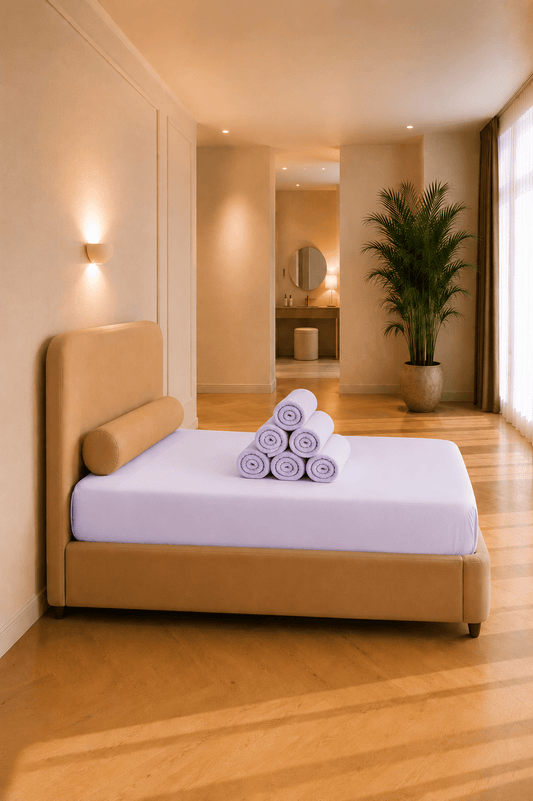
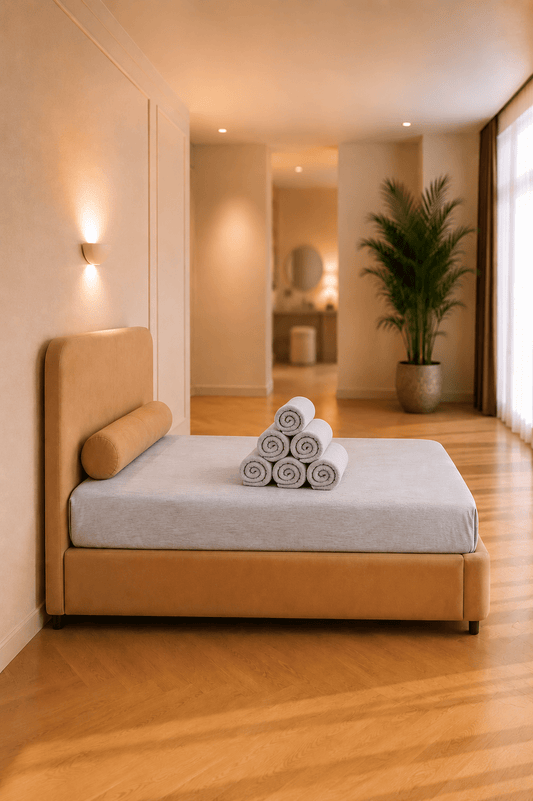
LMD Dreamland brings together bed linen and bedroom comfort for the moment when day transitions into rest. The collection includes duvet covers, fitted sheets, and bedding in various materials, colours, and designs, and also provides access to separate collections for pillows and duvets, nightwear, and bedspreads. This allows both the bed itself and the evening and sleeping environment to be tailored step by step to personal preference, season, and interior.
Bed linen forms the basis of a well-made bed
Duvet covers and fitted sheets have both a practical and visual function. They come into direct or almost direct contact with the body and at the same time largely determine the look of the bed. When choosing, material, size, weave structure, colour, and maintenance are therefore more important than a single general description like soft or luxurious.
A duvet cover must match the duvet
Before purchasing, always check the dimensions of the duvet and compare them with the stated size of the duvet cover. A matching size ensures that the duvet can be properly distributed within the cover. Also, check whether a product is sold individually or as part of a set with one or more pillowcases.
Choose a fitted sheet based on mattress size and height
For a fitted sheet, the length and width of the mattress are the primary dimensions that must match. The height or thickness of the mattress can also be important for the fit. Therefore, use the product specifications and measure the mattress if you are unsure of the size. Large bedding retailers also treat mattress size and suitable height as important selection criteria for fitted sheets. :contentReference[oaicite:4]{index=4}
Materials give bedding a different texture and appearance
LMD Dreamland features various material types and textile constructions. The current collection includes products offered in cotton, linen, Tencel lyocell, organic percale cotton, and various bamboo designs. Not every material feels or drapes the same, and maintenance instructions can also differ. Therefore, always check the exact composition of the individual item.
Cotton as a versatile base for bed linen
Cotton is widely used for bedding and can feel very different depending on the yarn, weave, and finish. Within the broader range of bed linen, cotton is used for duvet covers, sheets, and pillowcases, and the material is available in many different colours and textures. :contentReference[oaicite:5]{index=5}
Linen for a recognizable natural texture
Linen has a visible texture that looks different from very smooth textiles. The current LMD Dreamland collection includes both pure linen products and combinations of linen and cotton. Pay close attention to the product composition: a pure linen item and a linen-cotton blend are not the same and should not be treated as identical materials. :contentReference[oaicite:6]{index=6}
Tencel lyocell in various designs
Various duvet covers and fitted sheets within the collection are offered in Tencel lyocell. This includes satin and twill designs in the product names. The fibre used and the way the textile is constructed are two different characteristics. Therefore, for each product, check both the material composition and the specific design and care information. :contentReference[oaicite:7]{index=7}
Percale, satin, and twill refer to the textile's finish
Words like percale, satin, and twill are used to distinguish a particular textile structure or weave and are not simply three other names for the same fabric. Thus, for example, cotton can come in a different finish than lyocell. For an accurate comparison, therefore, one must always consider both the fibre composition and the stated textile finish.
Colour and texture help determine the bedroom's ambiance
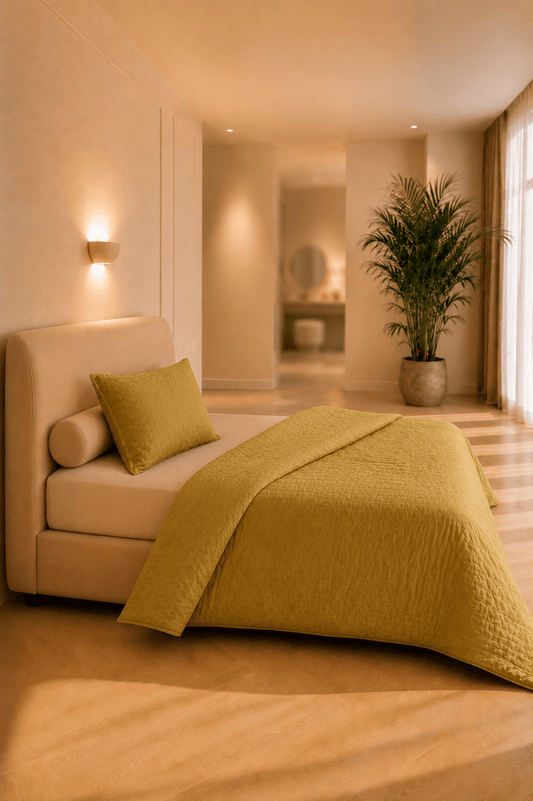
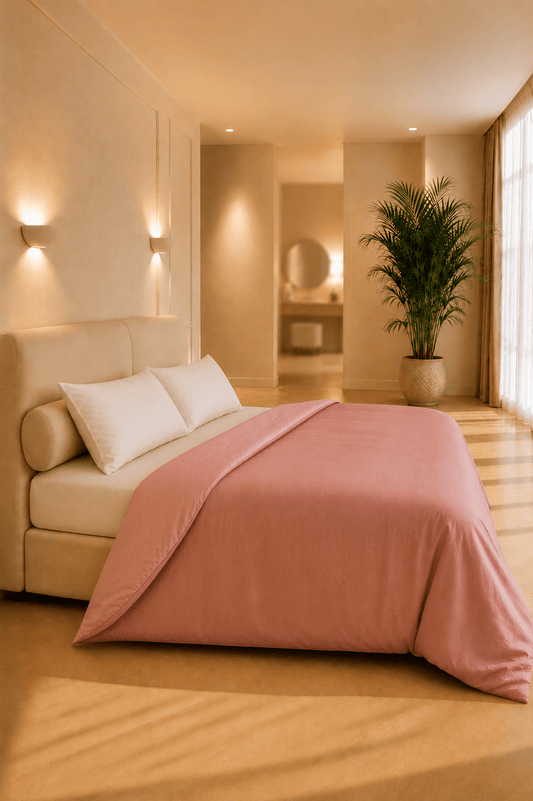
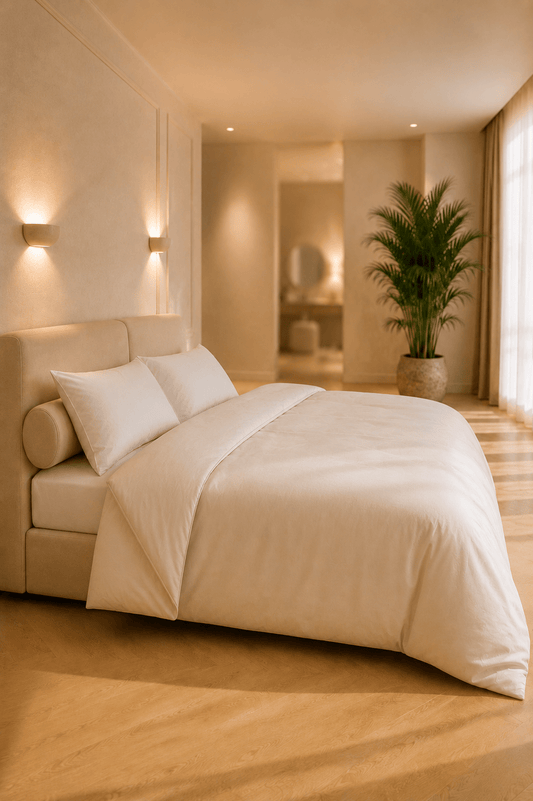
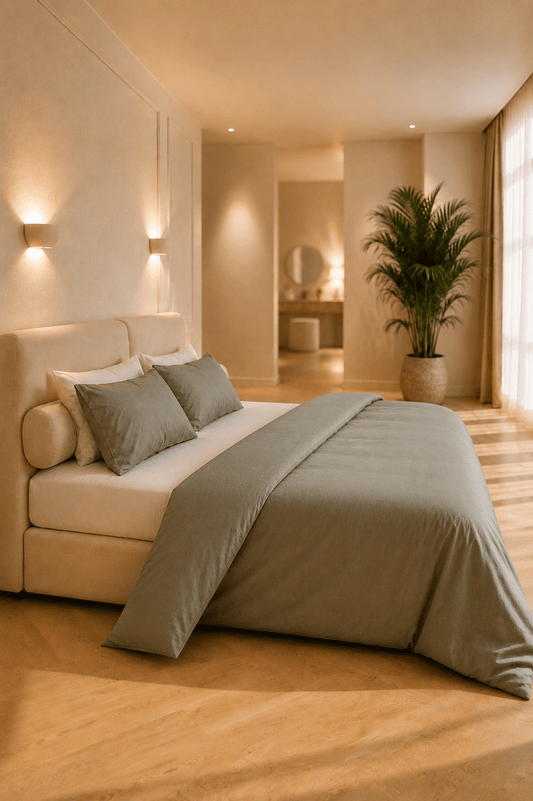
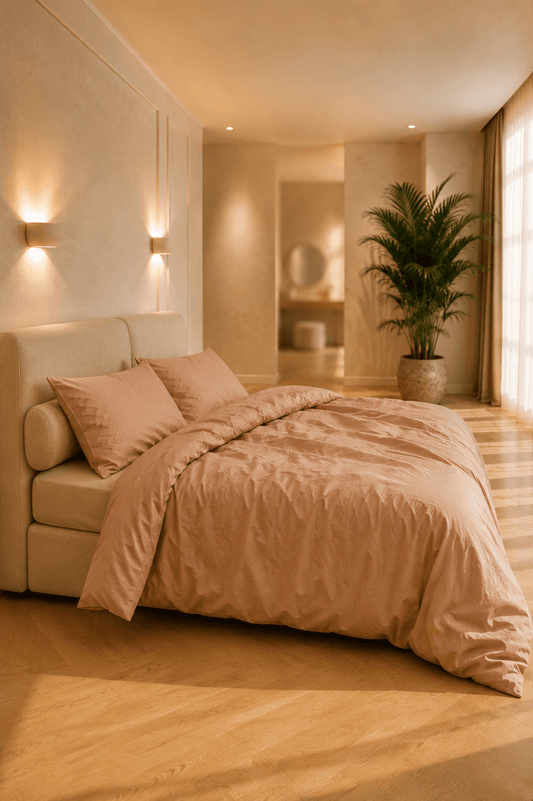
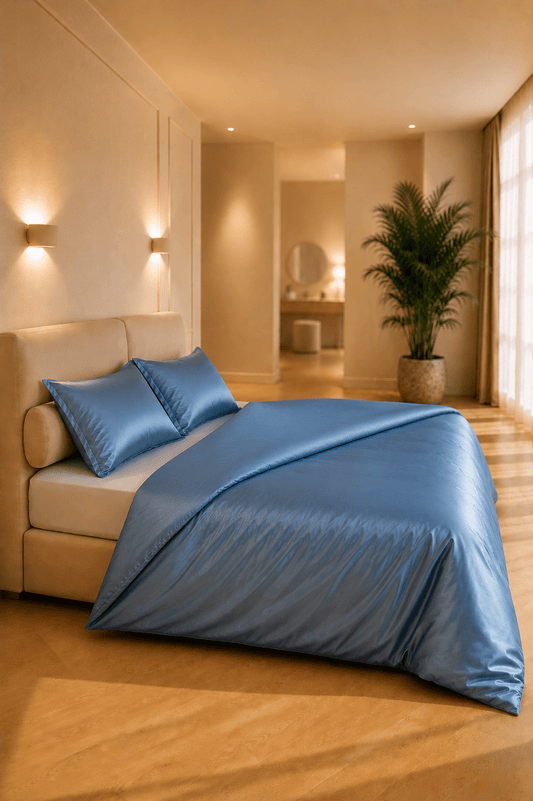
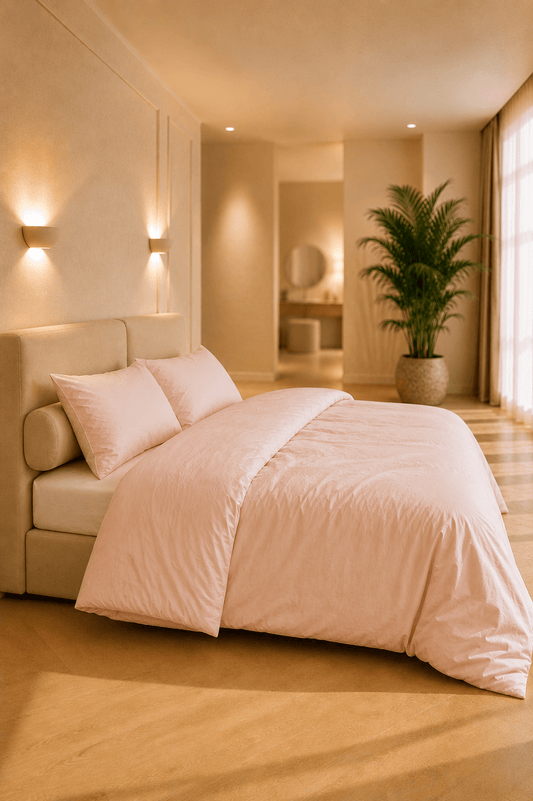
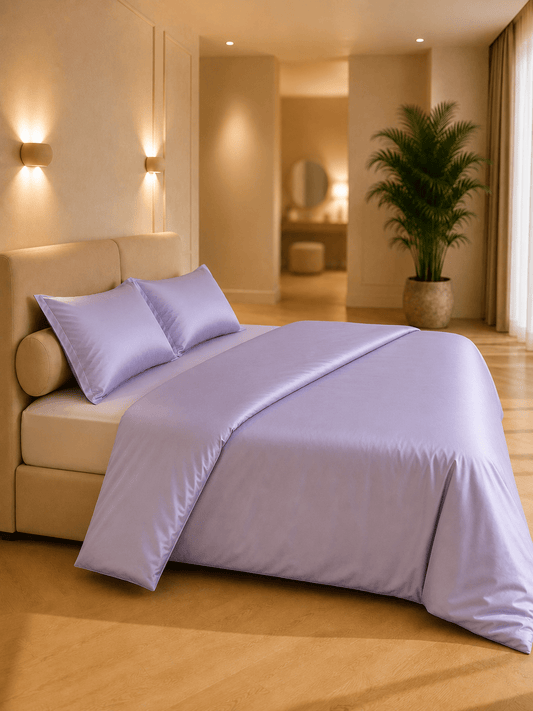
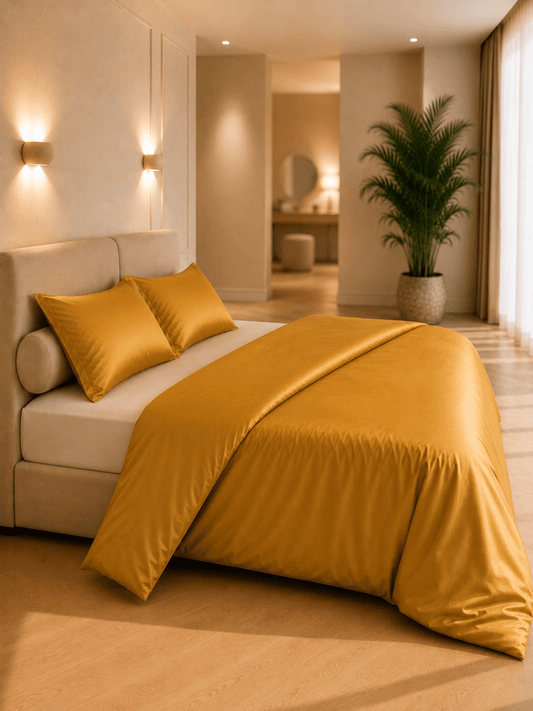
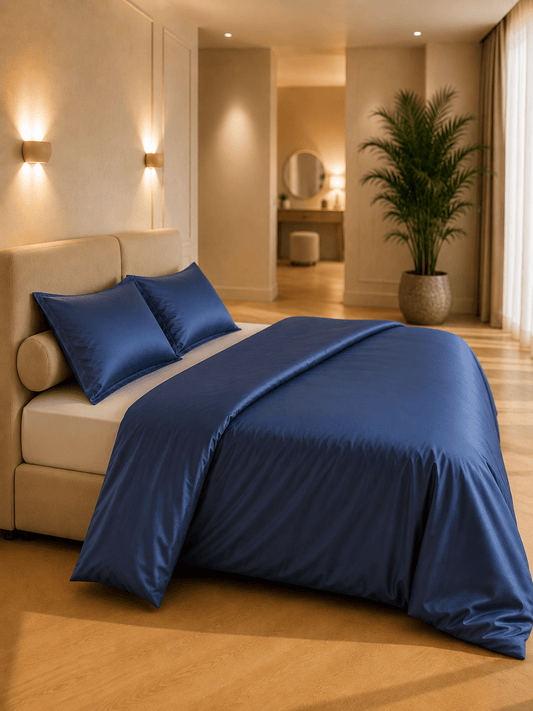
Bedding visually occupies a large surface area and can therefore strongly influence the atmosphere of a bedroom. The collection includes various calm and pronounced colours, including beige, soft white, caramel, olive green, terra rose, ocean blue, powder pink, lavender blue, ochre yellow, and dark blue. This allows the bed to match the existing interior or to be used as a stronger block of colour. :contentReference[oaicite:8]{index=8}
Neutral tones give other elements more space
Beige, white, and other calm tones can be easily combined with wood, natural materials, and various forms of bedroom decoration. Those who wish to maintain a calm base can add variation by combining different materials and textures instead of using many contrasting colours.
Colour can make the bed a visual focal point
Green, blue, pink, yellow, and other more distinct colours draw more attention when applied over a large duvet cover or fitted sheet. A single pronounced colour can therefore be sufficient to change the look of the bedroom without having to re-select all accessories.
Three specialized collections within LMD Dreamland
LMD Dreamland is broader than just duvet covers and fitted sheets. Therefore, pillows and duvets, nightwear, and bedspreads are organized as separate sub-collections. Each page can thus delve deeper into its specific selection questions without all topics getting mixed up on this landing page.
Pillows and duvets for support and temperature
Within Pillows and duvetsthe focus is on pillows and different types of duvets. The current collection includes pillows in various sizes and soft or firm designs, as well as 4-season duvets, cooling duvets, comfort duvets, and summer duvets. :contentReference[oaicite:9]{index=9} The choice therefore requires a different approach than that for a duvet cover: for pillows, support and size play a role, while for duvets, season, warmth requirements, and dimensions are central.
Nightwear for the moments before and around sleep
Nightweardeals with clothing specifically worn around the evening, night, and quiet moments at home. This collection is conceptually separate from bed linen: here, fit, clothing type, material, season, and wearing comfort become the main selection criteria. This means the broad LMD Dreamland page does not have to compete on the same search terms as the nightwear collection.
Bedspreads for an extra layer on the bed
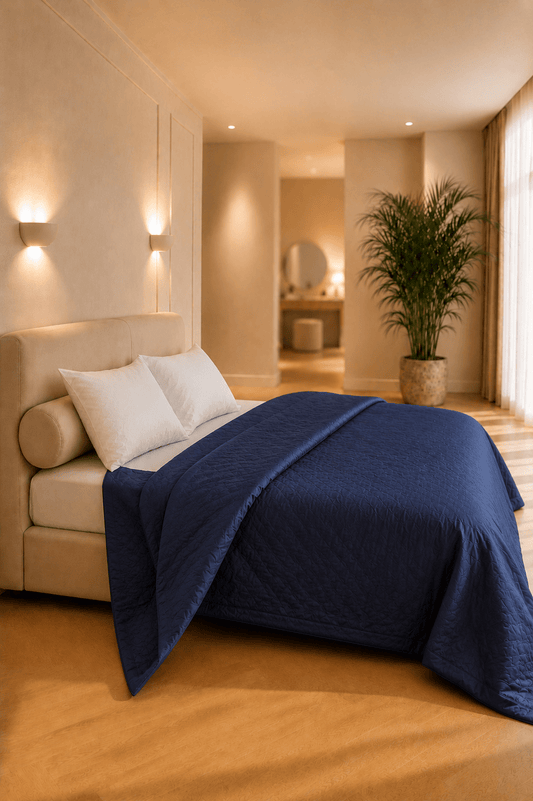
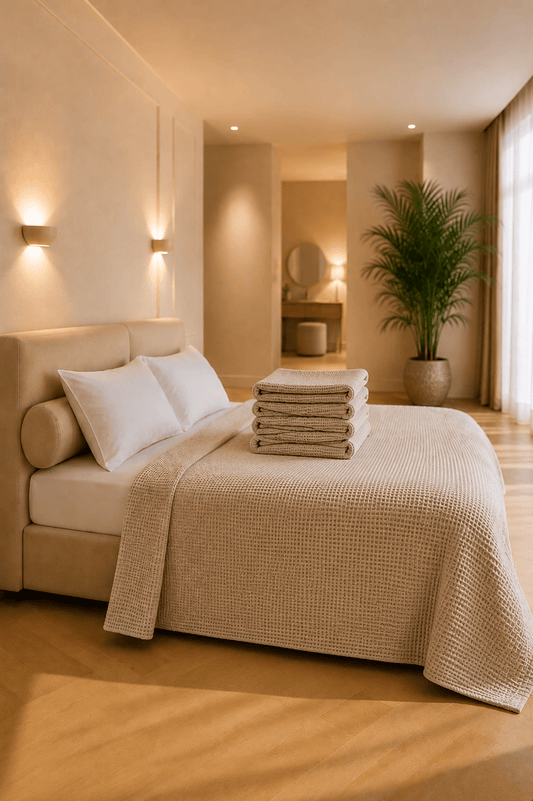
Within Bedspreadsthe visible top layer of the bed is central. A bedspread can cover a large part of the duvet, thereby adding colour, pattern, and texture to the bedroom. Size is particularly important here because the desired overhang helps determine how a bedspread drapes over the bed. Even large bedding stores treat size and material as central selection criteria for bedspreads. :contentReference[oaicite:10]{index=10}
The correct size remains important for every type of bed linen
A product may be a perfect fit in terms of material and colour but still be impractical if the dimensions do not match the bed, mattress, duvet, or pillow. Therefore, always measure the item for which the textile is intended and compare these dimensions with the product specifications.
Measure the duvet before choosing a cover
Do not rely solely on terms like single or double. Check the actual length and width of the duvet. Different providers use multiple standard sizes and also advise measuring the existing duvet before choosing a new cover. :contentReference[oaicite:11]{index=11}
For fitted sheets, also check the type of mattress
A standard mattress, thicker mattress, topper, or other sleeping surface can have a different height. Therefore, check not only the length and width but also what the manufacturer states about the suitable mattress height. A fitted sheet that is too shallow may not stay as well around the mattress edge.
Pillowcases should match the pillow
Pillows also come in various dimensions. Within the separate pillow collection, for example, models of 40 × 60 cm, 50 × 60 cm, 50 × 70 cm, and 60 × 60 cm are visible. :contentReference[oaicite:12]{index=12} Therefore, check the size of a pillowcase or bedding set when it is to be used with an existing pillow.
Choosing bed linen as a combination instead of loose products
A bed usually consists of several layers that must work together: mattress, fitted sheet, duvet, duvet cover, pillow, and pillowcase. A bedspread can come on top as an additional visible layer. By viewing these components as a whole, you prevent sizes or materials from not fitting together well only after purchase.
Start with the mattress, duvet, and pillow
The fixed sizing is determined by the components that are already present. Therefore, first measure the mattress, duvet, and pillow. Then, the fitted sheet, duvet cover, and pillowcase can be matched to those sizes. Colour and design only become decisive afterwards.
Use a bedspread as a separate top layer
A bedspread does not have to have the same function as the duvet. Often, it primarily forms an extra layer on top of the made-up bed and therefore has an important decorative role. The correct size partly depends on how much of the sides of the bed need to be covered.
Maintenance varies by material and finish
There is no universal washing temperature or drying method suitable for every material in bed linen. Cotton, linen, lyocell, various blended fibres, and specific textile finishes can have different instructions. Therefore, always follow the care label of the individual item.
Check the wash label before the first wash
Look at the recommended washing temperature, drying method, and any instructions for ironing or dry cleaning. Even large manufacturers provide care instructions for each individual bed linen product, not just for a general category. :contentReference[oaicite:13]{index=13}
Do not treat every material the same way
A linen duvet cover does not have to have the same care instructions as a satin lyocell design or a cotton percale fitted sheet. Product-specific information therefore always takes precedence over general bedding care tips.
How do you choose bed linen for your bedroom?
Start with what needs to fit technically, then make your choice based on feel, appearance, and material.
- Product type:determine whether you need a duvet cover, fitted sheet, bedding set, pillow, duvet, or bedspread.
- Dimensions:measure your mattress, duvet, and pillow before choosing new bed linen.
- Material composition:check the exact fibres and percentages on the individual product page.
- Design:pay attention to terms such as percale, satin, or twill and compare them alongside the material composition.
- Colour:determine whether the bed should calmly blend with the room or create a stronger colour accent.
- Season:for duvets and other warmth-determining products, look at their specific use and product information.
- Maintenance:check washing and drying instructions before choosing.
- Combination:coordinate the fitted sheet, duvet cover, pillowcases, and any bedspread without everything having to be the exact same colour.
Why choose LMD Dreamland?
LMD Dreamland brings together different elements of the bedroom without conflating them. The landing page primarily focuses on bed linen such as duvet covers and fitted sheets, then specifically refers to specialized collections for pillows and duvets, nightwear, and bedspreads. This allows each product group to be chosen based on the criteria that truly matter.
LM Group Belgium is a Belgian webshop located in Flanders.Within LMD Dreamland, the bedroom is approached as a combination of suitable bed linen, sleeping comfort, and products for the quiet moments around night.
Frequently asked questions about bed linen and sleeping comfort
What falls under bed linen?
Bed linen is a broad collective term for textile products used around the bed, such as duvet covers, fitted sheets, flat sheets, and pillowcases. Bedspreads are also used as bed linen, while pillows and duvets primarily constitute the filling and sleeping comfort itself.
What size duvet cover do I need?
Choose a duvet cover that matches the actual dimensions of your duvet. Measure the duvet or check the existing label and compare the length and width with the product information of the cover.
How do I choose a fitted sheet that fits well?
Check the length and width of the mattress, and also look at the maximum or recommended mattress height for the fitted sheet if it is stated. This extra measurement can be particularly important for thicker mattresses and toppers.
What is the difference between material and weave?
The material tells you which fibres a textile product consists of, for example, cotton, linen, or lyocell. A designation such as satin, percale, or twill says something different about the finish or the way the textile is constructed. Both pieces of information must therefore be considered separately.
Can I combine different materials on the same bed?
Yes. A fitted sheet, duvet cover, and bedspread do not necessarily have to be made of the same material. However, check the maintenance instructions separately and choose combinations that are comfortable for the intended use and visually match.
Does a bedspread need to be the same size as the duvet?
Not necessarily. A bedspread has a different function and is often placed over a larger part of the bed. The suitable size depends on the dimensions of the bed and how much overhang is desired on the sides.
Where can I find pillows and duvets?
The separate collection Pillows and duvetsbrings together pillows and different types of duvets. There, selection questions regarding firmness, size, season, and warmth can be addressed much more comprehensively than on this broad bed linen page.
Where can I find nightwear within LMD Dreamland?
Pajamas, robes, kimonos, and other nightwear are not conceptually covered by duvet covers or fitted sheets. Therefore, Nightwearhas a separate collection where clothing type, material, fit, and wearing occasion can be central.
Where can I find bedspreads for the bed?
For a decorative or extra textile layer on top of the made-up bed, you can proceed to Bedspreads. There, size, material, structure, pattern, and the desired drape over the bed are central.


 Sold out